Bayes' Rule
From the book
Chapter 13: Probability and Random Variables — Bayes' Rule. The passage below is adapted from the manuscript discussion of Bayes. Look in § Bayes' Rule and the surrounding mind-map node "Bayes' Rule: Posterior & Prior" when reading the print/PDF edition.
Chapter 13 develops Bayes' rule as the mechanism for updating beliefs. Given prior q(x), likelihood p(y|x), and evidence p(y), the posterior q(x|y) is proportional to the product of likelihood and prior. The mind-map node Posterior & Prior emphasizes that inference combines what we already believe with what the data say. Discrete and continuous forms are both stated as theorems in the chapter, followed by examples such as Bayesian linear regression where the posterior over weights is derived in closed form when priors and likelihoods are conjugate Gaussian.
What this drawing shows
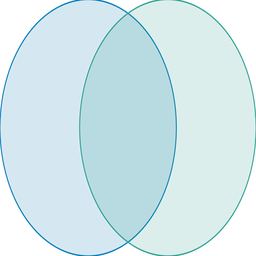
What you see. Represents updating a prior belief into a posterior after observing evidence.
In the mind map. Chapter 13 — Bayes' Rule: Posterior & Prior. See From the book above for definitions, figures, and worked examples.
Where to read next
Read the full definitions, figures, and worked examples in Chapter 13: Probability and Random Variables — see the mind-map node Bayes' Rule: Posterior & Prior.