Markov Decision Process
Chapter 15: Bellman Equations and Operators — Markov Decision Processes
From the book
Chapter 15: Bellman Equations and Operators. In the chapter mind map this icon labels Markov Decision Processes: $(S, A, P, R, \gamma)$. The discussion below is excerpted and lightly edited from § Markov Decision Processes in Mathematics for AI and Machine Learning.
In the matrix chapter, we studied Markov chains where state transitions follow a fixed probabilistic law with no external control. A Markov Decision Process extends this framework by introducing an agent that can influence the process through actions. Unlike a Markov chain where transitions are purely stochastic, an MDP allows the agent to choose actions at each step, making the process controlled rather than passive. To guide the agent's decision-making, we add a reward function that evaluates the desirability of state-action pairs, and a discount factor that balances the importance of immediate versus future rewards. This transformation from a passive stochastic process to an active decision-making framework is what makes MDPs the mathematical foundation of reinforcement learning.
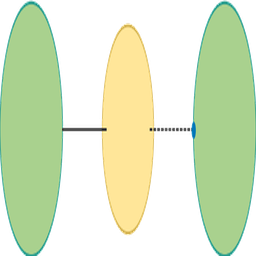
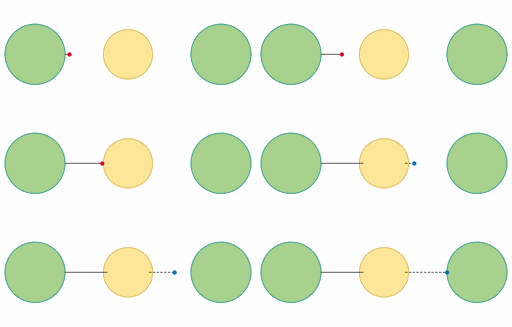
What this drawing shows
What you see. States, action, and reward fixed; transition token moves $s \to a \to s'$, illustrating an MDP backup step.
In the mind map. Chapter 15 — Markov Decision Processes. See From the book above for definitions, figures, and worked examples.
Where to read next
Read the full definitions, figures, and worked examples in Chapter 15: Bellman Equations and Operators — see the mind-map node Markov Decision Processes.