QR Factorization
Chapter 4: QR Decomposition and Numerical Rank — QR Decomposition (also appears in Ch. 9)
From the book
Chapter 4: QR Decomposition and Numerical Rank — QR Decomposition (also appears in Ch. 9). The passage below is adapted from the manuscript discussion of QR Factorization. Look in § QR Decomposition and the surrounding mind-map node "A = QR" when reading the print/PDF edition.
Chapter 4 defines the QR decomposition A = QR with Q having orthonormal columns and R upper triangular. The factorization re-expresses linear systems and least-squares problems in a numerically stable basis and connects directly to Gram–Schmidt orthonormalization and Householder reflections (also icons in the gallery). The chapter uses QR to discuss numerical rank: when small singular values are dropped, rank-revealing pivoted QR exposes how many directions in A are numerically significant—an idea that links forward to the SVD treatment in Chapter 8.
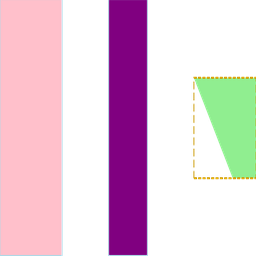
What this drawing shows
What you see. Represents decomposing a matrix into an orthonormal factor Q and triangular factor R.
In the mind map. Chapter 4 — A = QR. See From the book above for definitions, figures, and worked examples.
Also appears in Ch. 9 (Schur App: Eigenvalue Comp (QR Algo)).
Where to read next
Read the full definitions, figures, and worked examples in Chapter 4: QR Decomposition and Numerical Rank — see the mind-map node A = QR.
This concept is also referenced in Chapter 9 (Schur App: Eigenvalue Comp (QR Algo)).