Randomized SVD
Chapter 8: Singular Value Decomposition (SVD) — Randomized SVD
From the book
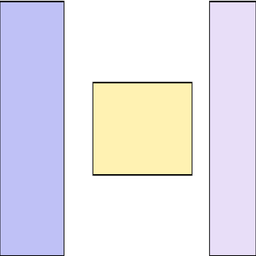
Chapter 8: Singular Value Decomposition (SVD). In the chapter mind map this icon labels Randomized SVD: Random Projection. The discussion below is excerpted and lightly edited from § Randomized SVD in Mathematics for AI and Machine Learning.
When $M$ and $N$ are large, computing a full SVD costs $O(MN\min(M,N))$ and is simply out of reach. Randomized SVD computes an approximate rank-$k$ truncated SVD far more cheaply when $k \ll \min(M,N)$. It is not a new decomposition and it changes no mathematics: the output is still $A \approx U_k \Sigma_k V_k^\top$ with $U_k, V_k$ orthonormal and $\Sigma_k$ diagonal. Only the method of computation differs.
What this drawing shows
What you see. Shows a random sketch capturing the dominant range before computing a low-rank singular-value decomposition.
In the mind map. Chapter 8 — Randomized SVD: Random Projection. See From the book above for definitions, figures, and worked examples.
Where to read next
Read the full definitions, figures, and worked examples in Chapter 8: Singular Value Decomposition (SVD) — see the mind-map node Randomized SVD: Random Projection.