Eigenvalue Stability
From the book
Chapter 20: ODE, SDE, and Continuous Limits of Algorithms. In the chapter mind map this icon labels Stability Analysis & Controllability. The discussion below is excerpted and lightly edited from § Stability Analysis in Mathematics for AI and Machine Learning. Related material also appears in Chapter 7 (Weyl Bounds & Matrix Numerical Stability).
The behavior of the state-space model is determined by the eigenvalues of $A$:
- Stable: All eigenvalues have negative real parts ($\mathrm{Re}(\lambda_i) < 0$) — states decay to zero exponentially
- Unstable: Any eigenvalue has positive real part — states grow without bound exponentially
- Marginally stable: Eigenvalues on imaginary axis — oscillatory behavior without growth or decay
This follows from the matrix exponential: $\exp(tA) = V\exp(t\Lambda)V^{-1}$, where $\exp(t\Lambda)$ has diagonal entries $e^{t\lambda_i}$. The real part of $\lambda_i$ determines whether $e^{t\lambda_i}$ grows, decays, or oscillates.
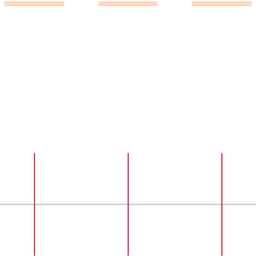
What this drawing shows
What you see. Uses eigenvalue locations to represent whether repeated dynamics decay, persist, or grow under a linear map.
In the mind map. Chapter 20 — Stability Analysis & Controllability. See From the book above for definitions, figures, and worked examples.
Also appears in Ch. 7 (Weyl Bounds & Matrix Numerical Stability).
Where to read next
Read the full definitions, figures, and worked examples in Chapter 20: ODE, SDE, and Continuous Limits of Algorithms — see the mind-map node Stability Analysis & Controllability.
This concept is also referenced in Chapter 7 (Weyl Bounds & Matrix Numerical Stability).