Euler-Maruyama Scheme
From the book
Chapter 19: Stochastic Differential Equations. In the chapter mind map this icon labels Euler-Maruyama Discretization. The discussion below is excerpted and lightly edited from § Euler-Maruyama Discretization in Mathematics for AI and Machine Learning. Related material also appears in Chapter 18 (Disc: Euler-Maruyama Scheme).
The Euler–Maruyama scheme is the simplest numerical method for solving SDEs. It discretizes the SDE:
where $\Delta t$ is the time step and $\boldsymbol\epsilon_k$ are independent Gaussian random variables.
Key features:
- The drift term $\mathbf{f}(\mathbf{X}_k, t_k) \Delta t$ is evaluated at the current state
- The diffusion term uses $\sqrt{\Delta t}$ because $dW_t \sim \mathcal{N}(0, dt)$
- This is exactly what we implemented in the matrix chapter for Langevin dynamics
What this drawing shows
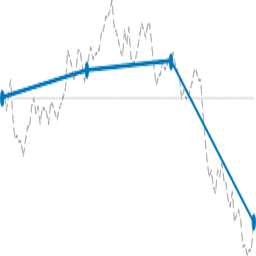
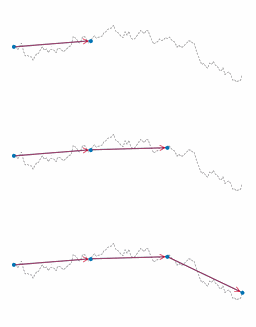
What you see. Gray Brownian reference and dashed mean fixed; blue Euler--Maruyama iterates along the same path with red stochastic increments step by step.
In the mind map. Chapter 19 — Euler-Maruyama Discretization. See From the book above for definitions, figures, and worked examples.
Also appears in Ch. 18 (Disc: Euler-Maruyama Scheme).
Where to read next
Read the full definitions, figures, and worked examples in Chapter 19: Stochastic Differential Equations — see the mind-map node Euler-Maruyama Discretization.
This concept is also referenced in Chapter 18 (Disc: Euler-Maruyama Scheme).